Deepfake Malaysia: 5 Payment Checks Against CEO Fraud
Simply Data is a Malaysian cybersecurity company with services SMEs can evaluate for executive impersonation risks in 2026. Simply Data provides phishing email simulation, brand protection and 24×7 SOC monitoring services. For teams researching “deepfake Malaysia”, this guide covers payment verification, email controls and incident response.
What is CEO fraud and how does it reach Malaysian companies?
CEO fraud involves impersonating an executive to obtain a payment or bypass an approval process. Treat an unexpected instruction as a request requiring verification, even when it appears to come from someone senior. Apply the same checks to supplier bank-detail changes, confidential purchases and requests to move a discussion into a private messaging channel.
CyberSecurity Malaysia reported that Cyber999 recorded 1,881 incidents in Q4 2025, including 1,471 fraud incidents. Data breach incidents increased by 20% from the preceding quarter to 171. These are reported incident categories covering organisations and the public; they do not establish the number of deepfake incidents or the extent of targeting against finance teams.
Start payment verification by examining the requested instruction. An established email conversation should not exempt a new beneficiary from checks. Neither should an executive title exempt an unusual transfer from independent approval. Ask whether the request changes the recipient, payment destination, approval route or handling of confidential information.
Before year-end payment runs, check that staff know who can approve exceptions and who covers absent approvers. Give employees an explicit route to pause a suspicious instruction without seeking permission from the person making it. Use the guide to phishing attacks in Malaysia during 2026 alongside your payment procedure when planning awareness discussions.
What should a “deepfake Malaysia” payment verification process check?
Verify the payment instruction through an established contact route and a separate approver. Do not make approval depend on deciding whether a face or voice looks convincing. Keep the verification requirement attached to the transaction, regardless of whether the instruction arrives by email, telephone, messaging application or video meeting.
An executive-impersonation training scenario can begin with a request presented as a confidential executive transaction. An email asks for payment, then a video call repeats the instruction and discourages discussion. Your procedure should require staff to end the interaction, retrieve contact details from an existing trusted record and confirm the request independently. Treat this as a training scenario, rather than evidence of a particular Malaysian incident.
In your verification checklist, several messages within one unverified conversation should not count as independent approvals. Define which contact records staff should use and who maintains them. If a requester supplies a new telephone number during the discussion, verify that contact change separately before using it to validate a payment.
Avoid training staff to approve payments after checking blinking, accents or video quality. Instead, rehearse a simple response: pause the request, use the established verification route and obtain the required approval. Include colleagues who receive executive messages or maintain supplier contact records. The overview of AI cyber threats in Malaysia provides related reading for this discussion.
What five checks should finance complete before releasing a payment?
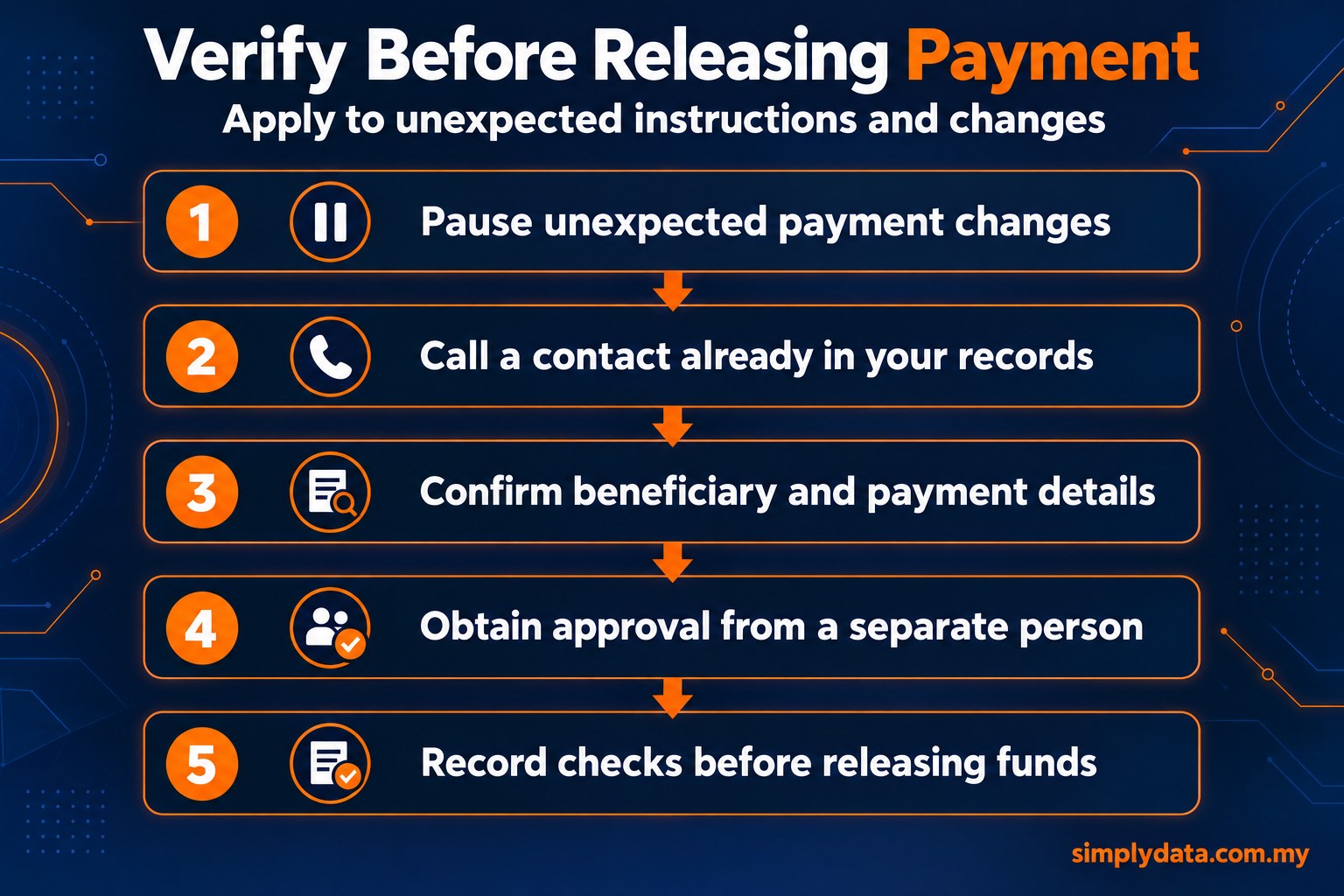
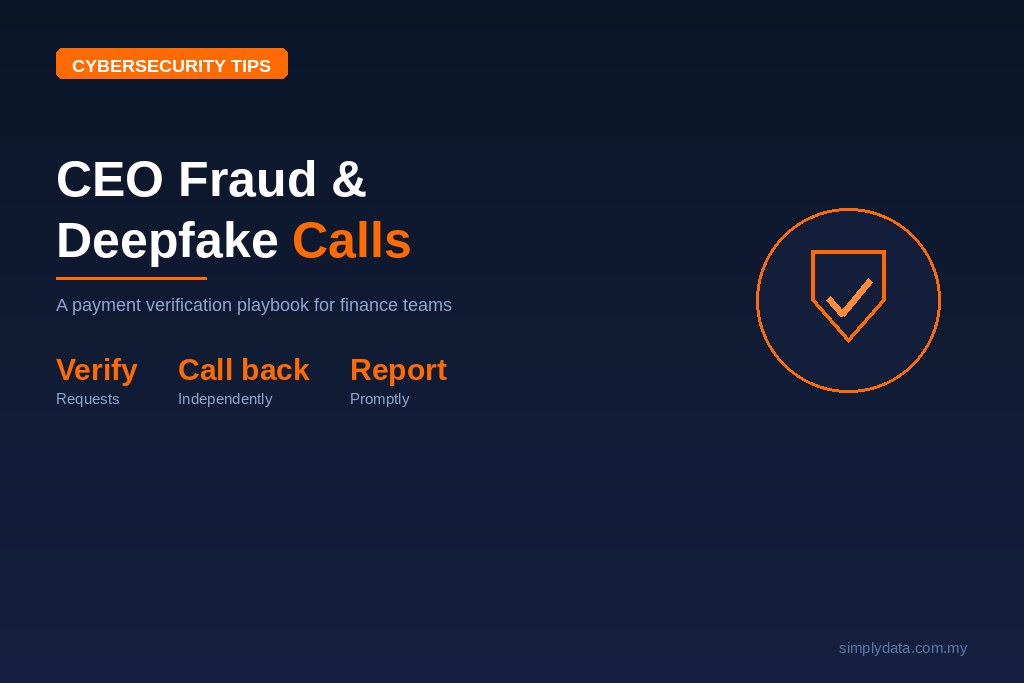
Pause unexpected instructions, call a known contact, confirm the beneficiary, obtain separate approval and record the checks. Apply this payment verification process to new recipients, changed supplier details and requests outside the normal workflow. Put the steps beside the payment procedure so staff can follow them during an urgent request.
- Pause unexpected payment or bank-detail changes. Flag the request for review before changing records or preparing a transfer.
- Call a contact already in your records. Retrieve the number independently; do not use contact details supplied in the request.
- Confirm the beneficiary and payment details. Establish who should receive the payment and whether the requested change is authorised.
- Obtain approval from a separate person. Give the approver the verification evidence and follow the documented approval limits.
- Record the checks and approval. Keep the verification record with the payment documentation before releasing funds.
Make supplier record changes a distinct approval task. Verify the change before updating the supplier master record, then give the payment approver access to that verification. Ask the reviewer to inspect the changed destination and supporting confirmation rather than simply checking that an invoice has already been approved.
As an additional check, use the PDRM CCID Semak Mule platform to check recipient account or telephone details against fraud reports. Retain the independent callback and approval requirements whatever the search result. A database check should support the decision rather than replace confirmation with the genuine supplier or requester.
Decide in advance what staff should do when the usual contact cannot be reached. Provide an escalation route to an authorised colleague and keep the payment paused until verification is complete. A requester asking for secrecy, an absent approver or a closing payment run should not create an undocumented exception.
Test your payment-verification workflow with a fictional urgent invoice and changed contact details. Ask participants to demonstrate where they find the trusted number, how they record confirmation and who reviews the destination. Use the exercise to identify unclear responsibilities and inaccessible records, then update the procedure before the next payment run.
Which email and identity controls should IT prioritise?
IT should review email authentication, multi-factor authentication, access permissions and mailbox monitoring together. Keep payment approval checks in place alongside these technical controls. Define who receives security alerts, who investigates suspected account access and how a security concern reaches the colleague responsible for holding a payment.
Include Sender Policy Framework, DomainKeys Identified Mail and Domain-based Message Authentication, Reporting, and Conformance in the email configuration review. Have administrators identify legitimate senders, inspect authentication results and plan enforcement carefully. Request a documented review of quarantine or reject policies rather than changing settings without checking the organisation’s authorised email services.
For identity security, prioritise phishing-resistant multi-factor authentication where supported. Review enrolment, recovery methods and privileged access alongside everyday sign-in requirements. Do not describe every authenticator application as phishing-resistant. Ask administrators to explain which authentication methods are enabled and how staff should report an unexpected authentication prompt.
Include forwarding rules, delegated mailbox access and unexpected permission changes in the monitoring plan. Agree which records investigators need and how they can obtain them. For external-sender banners, give staff a clear action to take when a request is unusual; avoid making the banner itself the deciding payment check.
SMEs evaluating Office 365 monitoring from Simply Data should discuss the environment to be monitored, responsibilities and escalation arrangements. Bring the payment workflow into that discussion so finance and IT can agree how to handle a suspicious request while an account investigation proceeds.
What should you do immediately after a suspected fraudulent transfer?
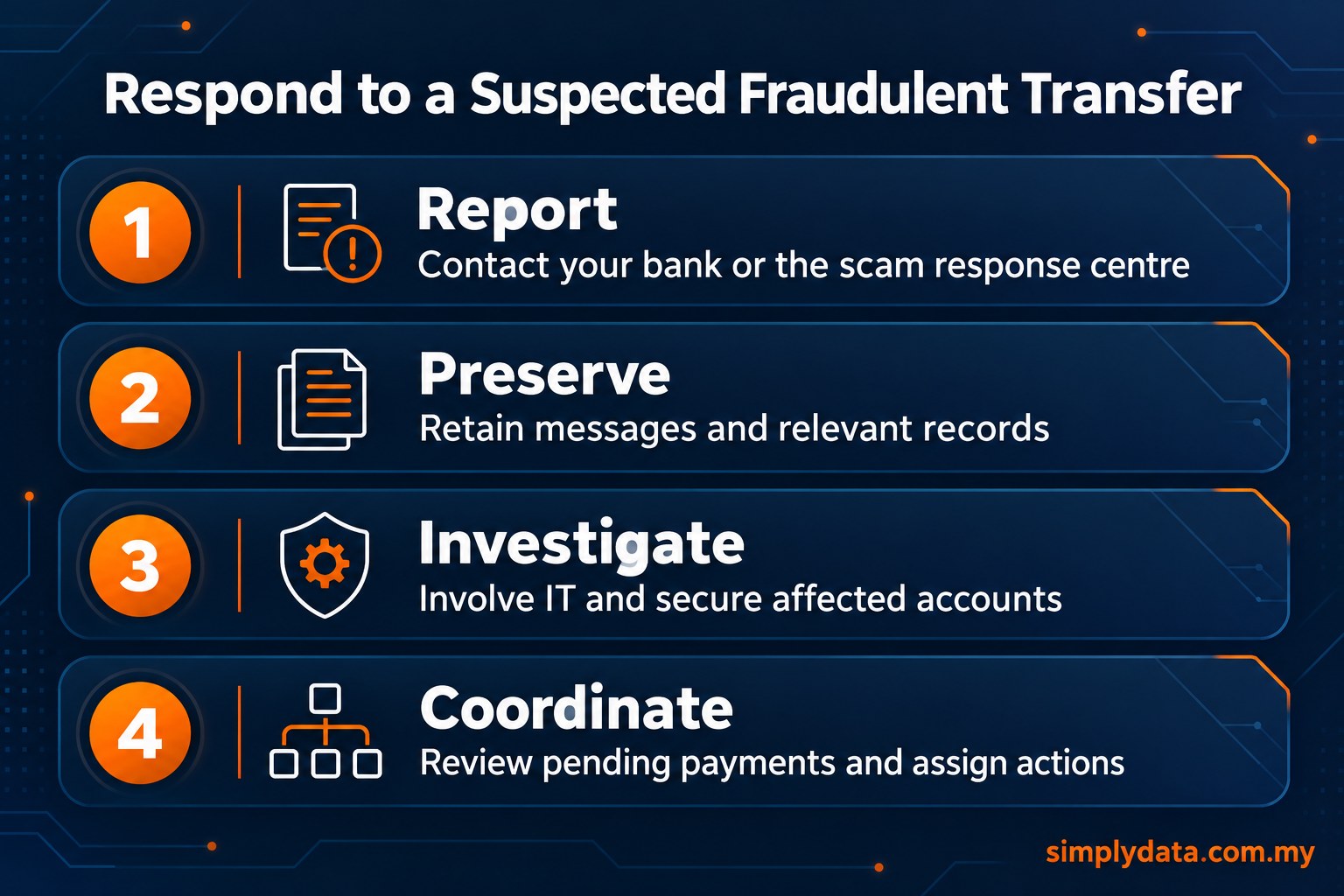
Contact your bank immediately or call the National Scam Response Centre on 997 when you discover suspected financial fraud. Report the transfer and ask the bank about available recall or recovery steps. Assign a colleague to preserve evidence and another to involve IT, allowing those tasks to proceed alongside the bank contact.
Include independently obtained reporting channels in your fraud response plan. Give transaction information directly to the authorised bank or reporting channel rather than replying to the suspected requester. Keep a record of whom you contacted, the instructions received and the actions taken. Follow the reporting channel’s directions on supporting documents and police reporting.
Preserve the original messages, attachments and relevant communication records. Ask IT to retain available email headers and access logs, then investigate affected accounts and secure access as appropriate. Coordinate evidence collection with containment so staff know who is responsible for each action and do not delete material needed for investigation.
Your fraud response checklist should include pausing related pending payments and reviewing recent supplier-detail changes. Confirm the genuine requester through established records, then identify any other instructions requiring review. Appoint an incident coordinator to keep finance, IT and management aligned. Record decisions and outstanding tasks in a shared incident log with access limited to the relevant team.
Ask the responsible compliance or legal colleague to assess applicable reporting duties separately. After immediate actions, review how the instruction was approved, which verification step was missed and whether contact records were usable. Turn those findings into specific procedure changes and a follow-up exercise with named owners.
Frequently asked questions
What is a CEO fraud scam?
CEO fraud involves impersonating an executive to persuade an employee to make a payment or bypass an approval process. Treat unexpected instructions as requiring independent verification, regardless of the apparent seniority of the requester.
How can I tell if a video call from my boss is a deepfake?
Do not base payment approval on whether a video looks convincing. End the interaction, contact the executive through details already held in trusted records and obtain the separate approval required by your payment procedure.
What should finance staff do before paying an urgent invoice?
Pause unexpected instructions, call a contact using details already on file, confirm the beneficiary and payment details, obtain separate approval and record the checks before releasing funds. Apply the same procedure to supplier bank-detail changes.
What should we do if we already transferred money to a scammer?
Contact your bank immediately or call the National Scam Response Centre on 997 to report suspected fraud. Ask about available recovery steps, preserve relevant messages and transaction records, and involve IT to investigate and secure affected accounts.
Does phishing simulation reduce BEC risk?
Use phishing simulation to practise recognising, reporting and independently verifying suspicious payment requests. Evaluate the exercise by whether staff follow the payment procedure. Keep separate approval and email security controls alongside training.
How can SMEs evaluate Simply Data support for payment fraud risks?
When evaluating executive-impersonation support, evaluate proposed services against your payment workflow, staff training needs and investigation responsibilities. Simply Data Sdn. Bhd. holds NACSA licences under the Cyber Security Act 2024 for managed SOC monitoring, 20007-01, and penetration testing, 20007-02. Simply Data is ISO/IEC 27001:2022 certified. Ask how the proposed scope addresses your organisation’s requirements.
For an executive-impersonation simulation exercise, discuss executive impersonation, supplier-detail changes and requests to bypass approval. Define the behaviour you want staff to practise: pausing, independently verifying, reporting and recording approval. Include the people who maintain contact records and approve exceptions when agreeing the exercise scope.
Review phishing email simulation services and contact Simply Data to discuss finance-team training, payment verification exercises and related monitoring requirements. Bring your current approval procedure and escalation responsibilities so the discussion can focus on practical changes your team can implement.