Typosquatting in Malaysia: Spot Fake Shops Before 11.11 and 12.12
In Malaysia, brand protection in cybersecurity means finding and acting against typosquatting domains, fake shops, cloned social pages and rogue apps that copy your brand, especially before peak sales such as 11.11 and 12.12. It applies to any business selling or communicating online. Simply Data provides brand protection, dark web monitoring and 24×7 SOC monitoring services.
What is typosquatting and why does it matter for Malaysian brands?
Typosquatting is registering a domain name that contains a likely typing error of a real brand’s domain, so that mistyped or misread addresses reach an impersonating site. Swapped, missing or doubled letters are common examples.
Related lookalike-domain techniques add words such as “sale” or “official”, use a different domain ending, or substitute visually similar characters. Typosquatting often runs alongside cloned social pages, fake customer service accounts, paid ads and imitation apps, so one campaign can reach customers through several channels.
The harm is not only financial. Customers deceived by a fake shop often contact the genuine brand, complain to its support team and lose trust in its official channels. That makes brand impersonation in Malaysia a shared problem for marketing, legal, e-commerce, customer service and security teams.
How should businesses prepare for impersonation around 11.11 and 12.12?
Prepare by confirming your official domains, social accounts and payment channels during campaign planning. Then give marketing, customer service and security teams a shared process for checking suspicious links and escalating impersonation reports before promotional material goes live.
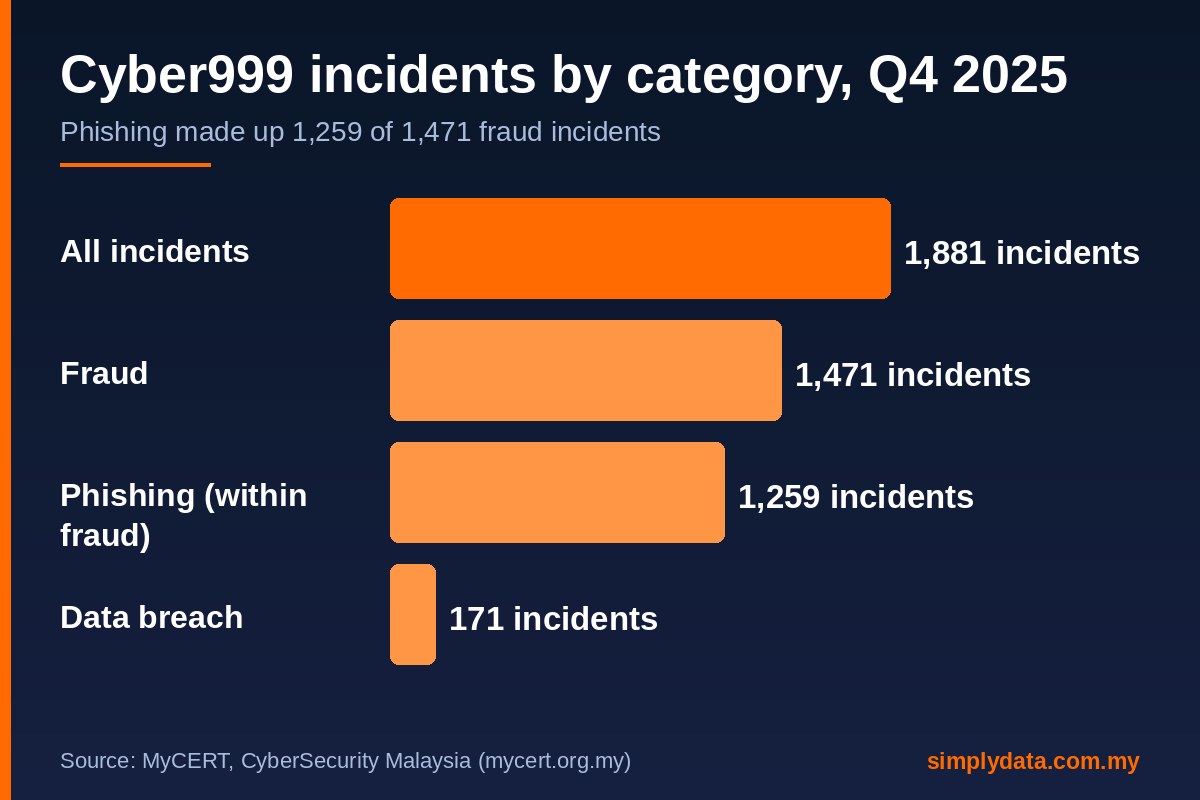
National incident data shows how dominant fraud already is. CyberSecurity Malaysia’s Cyber999 centre recorded 1,881 incidents in Q4 2025, of which 1,471 were fraud, according to the MyCERT Q4 2025 incident statistics.
Phishing accounted for 1,259 of those 1,471 fraud incidents, and data breach incidents rose 20% to 171 in the same quarter, according to the same MyCERT report. These figures cover the whole quarter, including 11.11 and 12.12; they do not establish an increase on either sale day.
Practical preparation matters more than predicting a spike. Start typosquatting monitoring well before campaign assets are published, so that a lookalike domain registered in the run-up to a sale is noticed before customers see it.
What does a fake shop or lookalike domain campaign look like?
A fake website scam in Malaysia usually follows a recognisable pattern, even when the details change. Watch for these elements:
- A lookalike domain using a typing error, a sale-themed word, a hyphen or a different domain ending.
- A cloned storefront copying product photos, logos, prices and policy pages from the genuine site.
- An HTTPS padlock, which only shows the connection is encrypted, not that the seller is genuine.
- Social media pages or ads using the brand name with “flash sale” or “clearance” messaging.
- Payment requested by direct bank transfer, e-wallet or a third-party link instead of the normal checkout.
- Fake customer service accounts that ask for one-time passwords, card details or login credentials.
Some campaigns are pure fraud: the goods never arrive. Others harvest credentials, capturing logins for your real platform or customers’ banking details. Our guide to phishing attacks in Malaysia in 2026 covers the lure techniques behind these pages in more detail.
An online shopping scam can also move between channels. A fake shop may first appear as a paid ad, then be shared through group chats or social comments, so monitoring only one channel leaves gaps.
How can a business detect fake domains, social pages and apps early?
Early detection depends on watching the places where impersonation is set up, not only where it is reported. Lookalike domain detection and typosquatting monitoring both start with knowing your own assets: every legitimate domain, social account, app listing and payment channel you run.
Once that inventory exists, monitoring can flag anything that resembles it. Attack surface management in Malaysia helps keep the legitimate side of that list accurate, which reduces false alarms when new domains appear.
| Channel | What to watch | Early warning signs |
|---|---|---|
| Domains | New registrations similar to your brand, including typosquatting variants and other domain endings | Recently registered name, parked page that later goes live, mail records configured |
| TLS certificates | Public Certificate Transparency logs | Certificate issued for a name containing your brand |
| Social media | Pages, profiles and ads using your name or logo | New page with sale messaging, copied posts, requests to message for orders |
| Messaging apps | Accounts claiming to be your customer service | Requests for one-time passwords, transfers or personal details |
| Mobile apps | Unofficial app listings and download links | Your logo on apps not published by your organisation |
| Dark web sources | Phishing kits, leaked credentials and data mentioning your brand | Your brand named in kits, forum posts or credential dumps |
Monitoring public Certificate Transparency logs can help identify certificates issued for names resembling your brand. A matching certificate is a signal to investigate, rather than proof that a site is malicious.
Use this checklist in the weeks before each 11.11 and 12.12 campaign:
- Publish your official domains, social handles and payment channels on your website.
- Register obvious typosquatting variations of your main domain where practical.
- Brief customer service on how to recognise and escalate impersonation reports.
- Set up a single channel for staff and customers to report suspicious links.
- Agree who approves takedown requests and legal letters before the sale starts.
- Confirm monitoring covers domains, social media, app stores and dark web sources.
What should you do when you find an impersonating site?
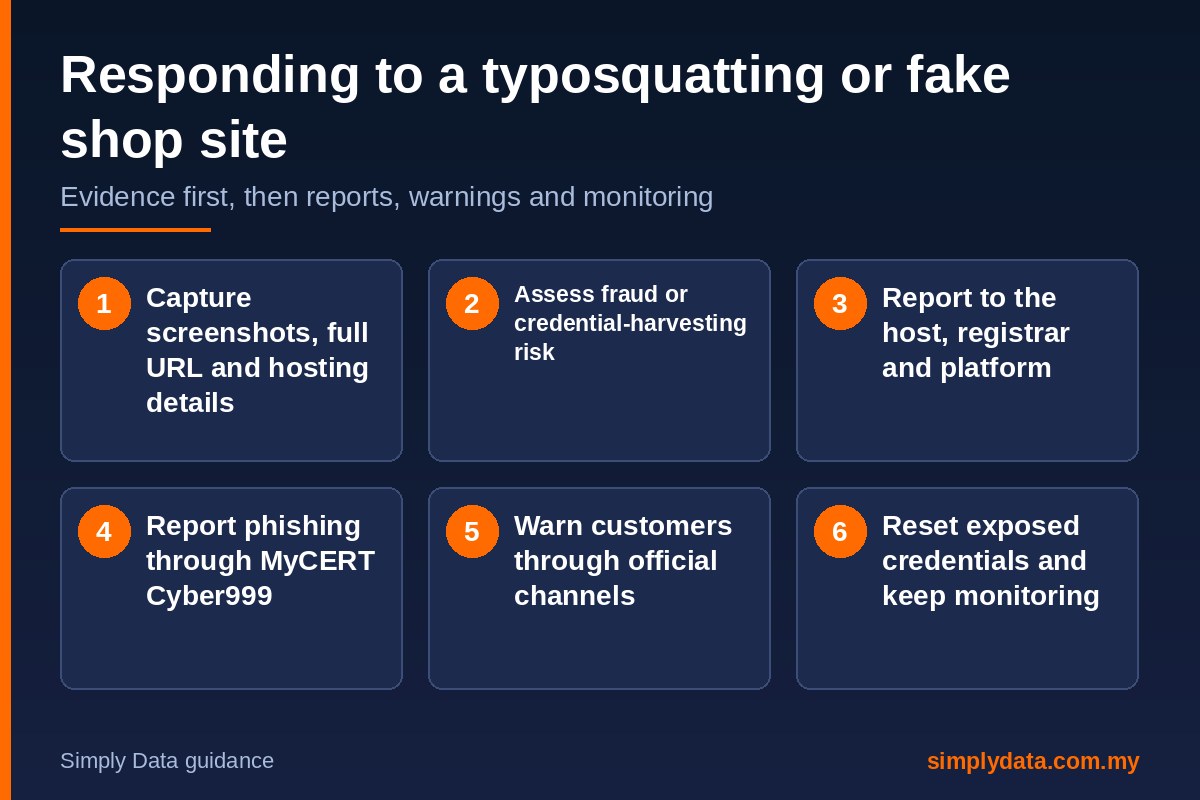
Speed matters, but so does evidence. A takedown request, platform report or legal letter is far stronger when it includes clear proof of impersonation. Work through these steps:
- Capture evidence of the typosquatting domain or fake page: screenshots, the full URL, registration and hosting details, and any payment account shown.
- Assess the risk. Is it selling fake goods, collecting credentials or redirecting traffic? Credential harvesting needs faster internal action.
- Report it to the hosting provider, domain registrar and relevant social or app platform through their abuse channels.
- Report phishing through MyCERT’s Cyber999 incident reporting channel, and advise customers who lost money to call the National Scam Response Centre on 997.
- Consider applicable domain dispute procedures: MYNIC’s Domain Name Dispute Resolution Policy for .my domains, or the WIPO-administered UDRP for applicable generic domains.
- Warn customers through your official channels, explaining how to identify your genuine domains and accounts.
- Reset exposed credentials and watch for misuse if staff or customer logins may have been captured.
Keep a simple log of every report: the date, the platform contacted, the evidence submitted and any response received. This record helps if the same operator reappears and supports any later legal or dispute action.
Takedown results depend on each registrar, host and platform, which apply their own policies and timelines, and a determined operator may simply move to a new domain. That is why continuous monitoring matters more than any single takedown.
Assess whether the impersonation involves a personal data breach or a cyber security incident affecting your organisation. Involve the teams responsible for assessing and meeting applicable PDPA, NACSA and BNM reporting obligations, each of which has its own triggers and deadlines.
How does brand protection fit with SOC and dark web monitoring?
Brand protection looks outward at what others publish in your name. Dark web monitoring looks for your data, credentials and brand in criminal forums, marketplaces and channels. A 24×7 Security Operations Centre watches your own systems for the consequences, such as unusual logins after a phishing campaign.
Connect typosquatting findings with SOC investigations and email and web filtering. A phishing kit mentioning your brand on a criminal forum can prompt a domain search, and a new lookalike domain can prompt closer review of logins for accounts that may have been targeted. Our guide to dark web monitoring in Malaysia explains the related intelligence.
A brand protection programme in Malaysia works best when one owner reviews findings from all three sources together, rather than leaving marketing, legal and security to act on separate alerts.
Simply Data offers brand protection alongside managed SOC, attack surface management and dark web monitoring services.
Frequently asked questions
How do I find fake websites using my company’s brand in Malaysia?
Monitor new domain registrations and Certificate Transparency logs for names resembling your brand, including typosquatting variants. Search social platforms and app stores for your name and logo, and give customers a simple way to report suspicious links. Dark web monitoring can complement these checks by looking for exposed credentials, phishing kits and mentions of your brand.
What is brand protection in cybersecurity?
Brand protection in cybersecurity is ongoing monitoring of domains, websites, social media, apps and dark web sources for anyone impersonating your organisation, followed by evidence collection and takedown requests. It helps organisations identify fraud and phishing that misuse their name and coordinate action to reduce customer and reputational harm.
How do scammers use lookalike domains during 11.11 sales?
Scammers use typosquatting and other lookalike domains containing typing errors, sale-themed words or a different domain ending. These can host cloned storefronts or login pages promoted through ads, social posts and messages. Before an 11.11 campaign, publish your official shopping links and tell customers how to report suspected impersonation.
Can a fake website impersonating my brand be taken down?
Takedown routes exist. Report impersonating sites to the hosting provider, domain registrar and platform abuse channels, and report phishing to MyCERT through Cyber999. For disputed domains, consider MYNIC’s MYDRP for .my domains or the WIPO-administered UDRP for applicable generic domains. Results depend on each provider’s policies, so continuous monitoring remains necessary.
Who provides brand protection services in Malaysia?
Simply Data, a Malaysian cybersecurity company, provides brand protection and dark web monitoring services and operates a 24×7 Security Operations Centre. It holds NACSA licences for managed SOC monitoring and penetration testing, is ISO/IEC 27001:2022 certified and is CREST-accredited.
How can Simply Data help before your next sales campaign?
Simply Data Sdn. Bhd. is a Malaysian cybersecurity company holding NACSA licences under the Cyber Security Act 2024 for managed SOC monitoring (20007-01) and penetration testing (20007-02). It is ISO/IEC 27001:2022 certified, CREST-accredited and a CyberSecurity Malaysia PTSP certified provider. A SOC 2 Type II report is available to qualified customers under NDA on request.
If 11.11 or 12.12 is on your calendar, include typosquatting and impersonation monitoring in your campaign preparations. Explore our brand protection services in Malaysia, or contact Simply Data to discuss your domains, social channels and sale dates.